
How to Search the Hawaii County Court Docket
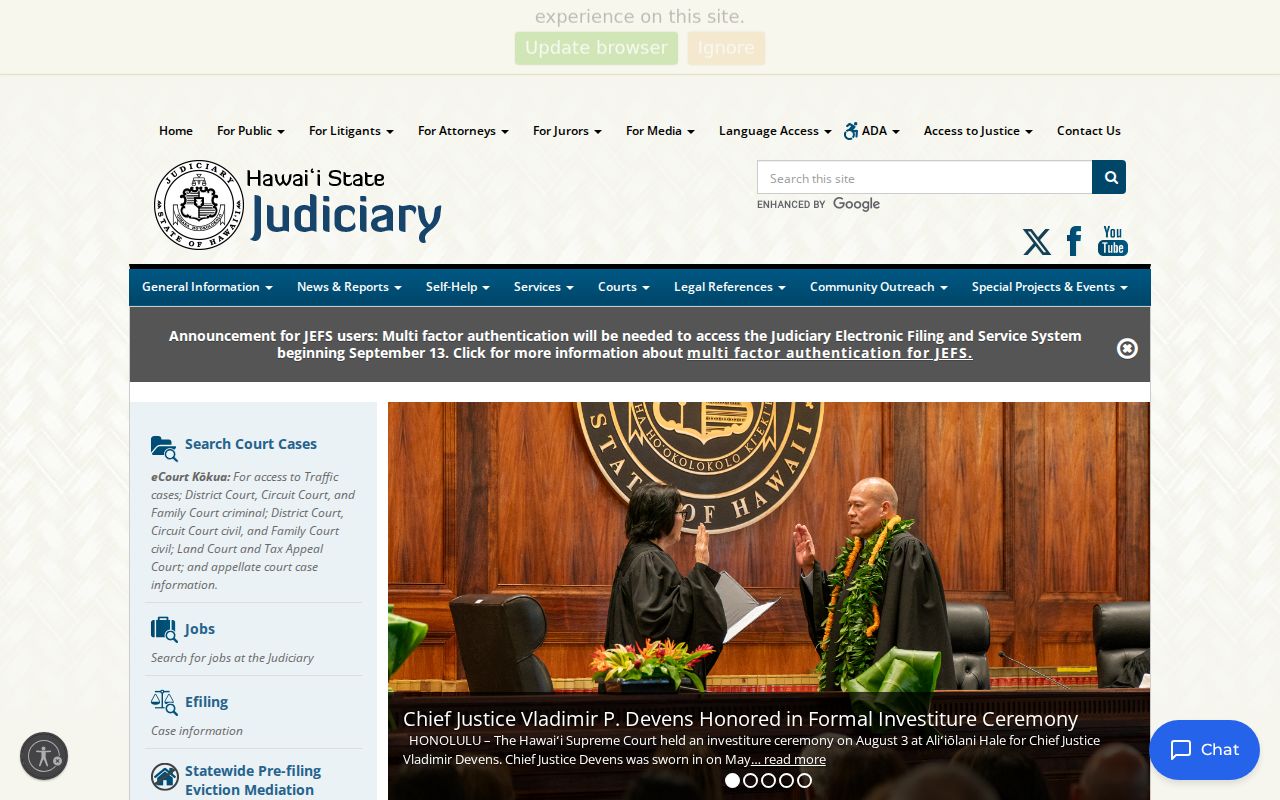
Start any Hawaii County court docket search at the Hawaii State Judiciary, the official statewide court source rather than a county government database.
Inside eCourt Kōkua, pick the search path that matches what you already know. A precise Case ID works best. Without it, search by person, company, or Party ID. Before trusting any match, confirm the court, case type, filing date, and party role. A shared name alone proves little. The Judiciary itself warns that name-only matches are never guaranteed.
- Enter eCourt Kōkua through the Judiciary records page.
- Search by Case ID, person, company name, or Party ID.
- Confirm the Third Circuit, case type, filing date, and status.
- Read docket entries and the hearing area in date order.
- Use a PDF icon, kiosk, clerk counter, or Form 3 for a document.
Online access is only the first channel. When material is missing or older, other routes exist. Call the right Third Circuit clerk, use a public kiosk or counter, read a posted daily calendar, or mail a written court-record request.
Hawaii County eCourt Kōkua Search Fields
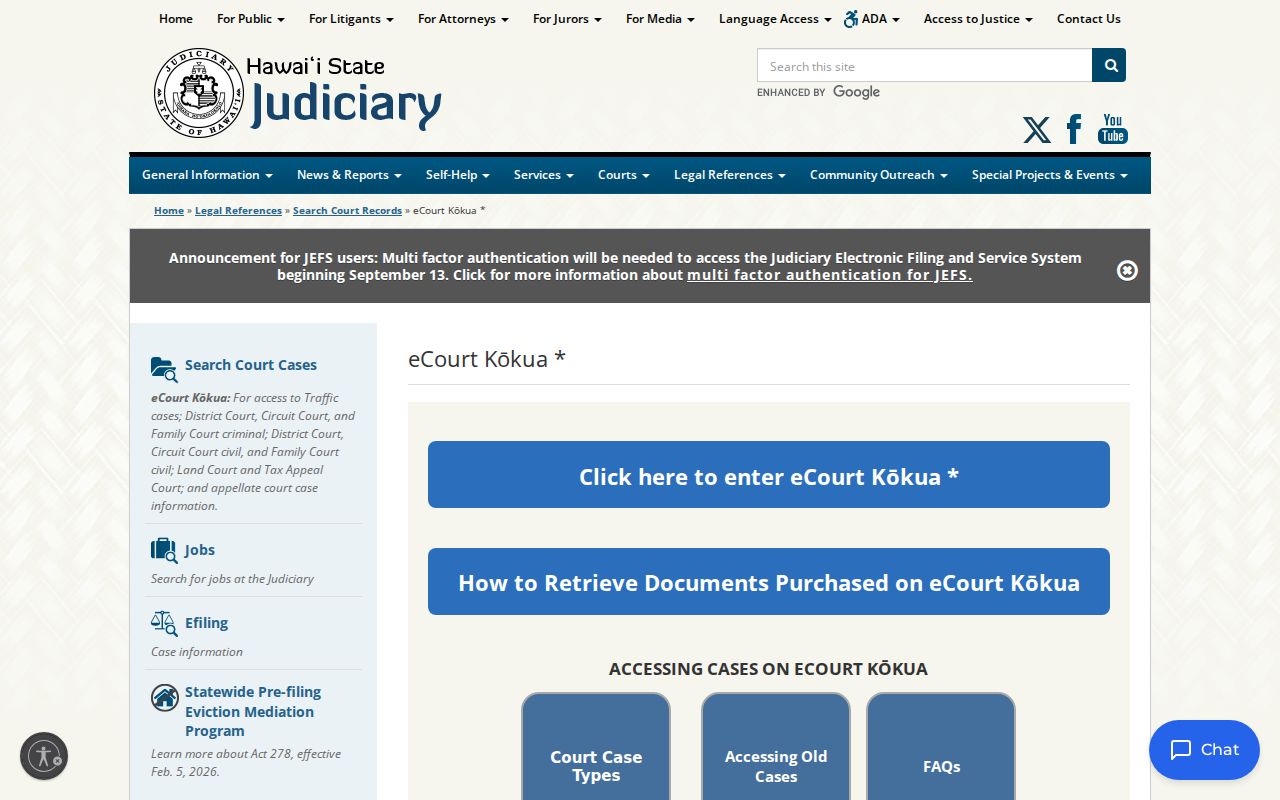
The eCourt Kōkua system and coverage page documents the statewide public window into JIMS, the official access route for Hawaii County court docket searches.
Search options now include name, person, company, Party ID, case, and upcoming-hearing paths. Person search requires both a first and last name. Add a filing date or case type to tame a broad result set. Phonetic search rescues uncertain spellings. Partial search helps when you know only part of a name.
| Field | Required | Use |
|---|---|---|
| First and last name | Person search | Find possible party matches |
| Filing date range | No | Narrow the result period |
| Case type | No | Focus on the likely Third Circuit track |
| Company name | Company mode | Search an organization |
| Party ID | ID mode | Separate recurring similar names |
| Case ID | Case mode | Open the most exact result |
Hours matter here. The portal generally runs Monday through Saturday from early morning to midnight HST, and Sunday from noon to midnight HST. Stick with one of the two newest major versions of a common desktop browser.
What a Court Docket Shows
A Hawaii County court docket opens with a case header. From there it links parties, events, hearings, dispositions, and financial information. Treat the docket as an index. It records that a filing or action happened, not the full document itself. Where remote purchase is allowed, a PDF icon connects to a public image. An icon's absence can simply mean the image is not online. The event itself stays public even so.
| Case ID | Court or circuit, case type, year, and sequence |
|---|---|
| Parties | Public names, roles, Party IDs, and attorneys where public |
| Docket entries | Date, event code, description, filing, and image indicator |
| Hearings | Date, time, location, courtroom, judge, and setting type |
| Outcome | Disposition, judgment, sentence, satisfaction, closure, or appeal |
| Financials | Assessments, receipts, transactions, and balance where entered |
Read the entries in order, by date. One caution: a motion is a request, not a ruling. A status line shows the case's current stage. It does not give the outcome of every charge or claim. For the controlling result, look to later orders and disposition entries.
The Hawaii County Case ID Begins With 3
The first digit of a modern Hawaii County Case ID marks the Third Circuit. Circuit criminal cases can follow 3CPC-YY-0000001; Circuit civil cases can follow 3CCV-YY-0000001. The type letters, year, and sequence all matter. Always keep the initial 3 in your search.
Older migrated numbers work differently and need the Judiciary conversion table. In its official example, 3PC-15-1-123 becomes 3PC151000123. Padding and case-type rules vary, so a guess can bury a valid result. Traffic records migrated from TRAVIS may also keep their older category codes.
- Docket
- The list of filed documents and actions taken in a case.
- Case ID
- The JIMS identifier for court, type, year, and sequence.
- Party ID
- A unique JIMS identifier that helps distinguish similar names.
- Disposition
- The recorded outcome assigned to a claim, charge, or case.
- Continuance
- A move of a setting to a later date, usually reflected in later entries.
Which Courts Keep Dockets
Hawaii County elects no county court clerk and runs no municipal court tier. Every state case docket sits with the Hawaii State Judiciary. The Circuit Court of the Third Circuit hears felonies and major civil matters. It also handles probate, guardianship, and the Family Court division. District Court takes traffic, parking, misdemeanors, and violations. Small claims, summary possession, and the rest of its jurisdiction land there too.
| Court | Docket covers | Where to search |
|---|---|---|
| Circuit Court of the Third Circuit | Felonies, major civil, probate, guardianship | eCourt Kōkua; Hilo or Kona Legal Documents |
| District Court of the Third Circuit | Traffic, parking, misdemeanors, small claims, summary possession | eCourt Kōkua, eTraffic where eligible, District clerk |
| Family Court of the Third Circuit | Family civil, juvenile, domestic-abuse, and related cases | Public eCourt slice; clerk for authorized access |
| ICA and Hawaii Supreme Court | State appeals and further review | Separate appellate Case ID in eCourt Kōkua |
Federal cases live elsewhere entirely. They use the U.S. District Court for the District of Hawaii, CM/ECF, and PACER. A dispute arising on Hawaii Island does not automatically become a Third Circuit case; jurisdiction and the filing court decide.
Hawaii County Court Jurisdiction in Pictures
Hawaii County court docket jurisdiction comes straight from the state's official Circuit Court jurisdiction page, which spells out what matters each circuit in Hawaii handles.
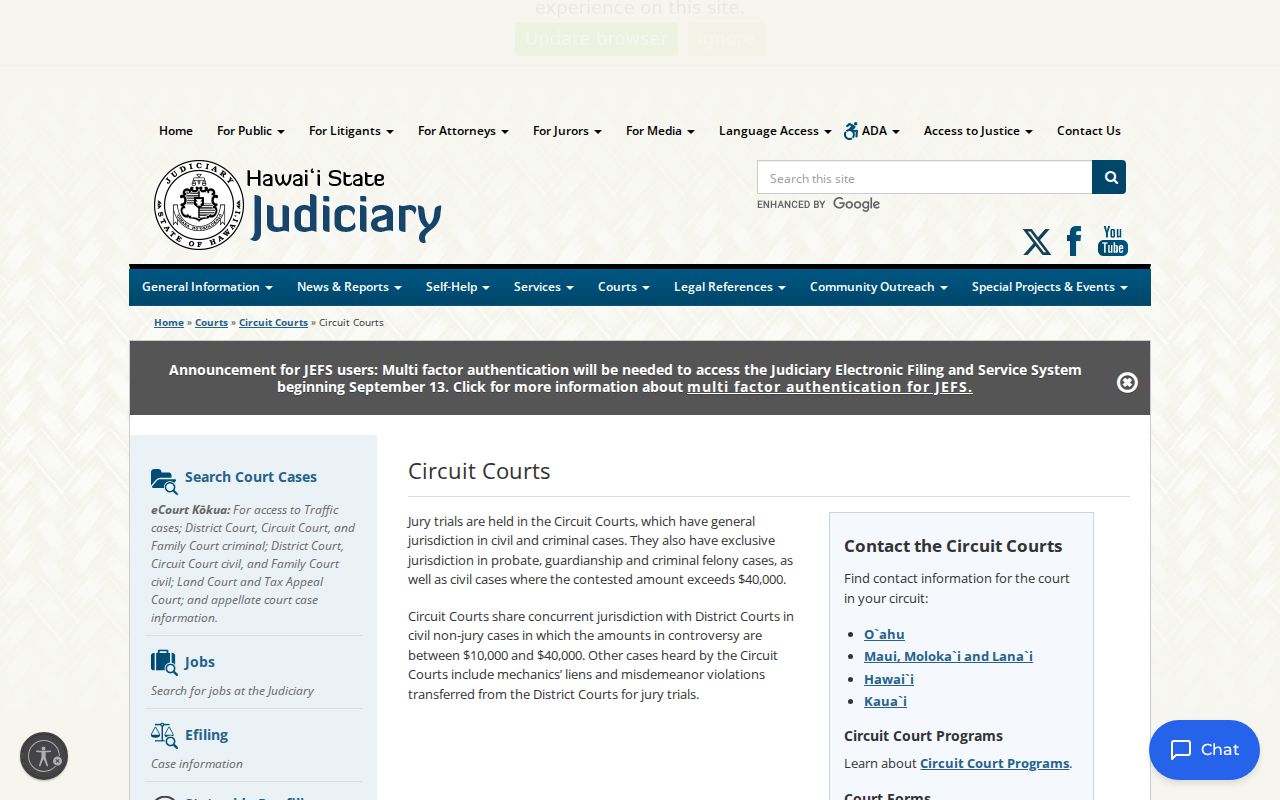
Felony cases and general-jurisdiction matters in Hawaii County land in the Third Circuit, not in a county courthouse system. Lower-level cases travel a different court track entirely. The District Court jurisdiction page spells out that next tier of the Hawaii County court docket.
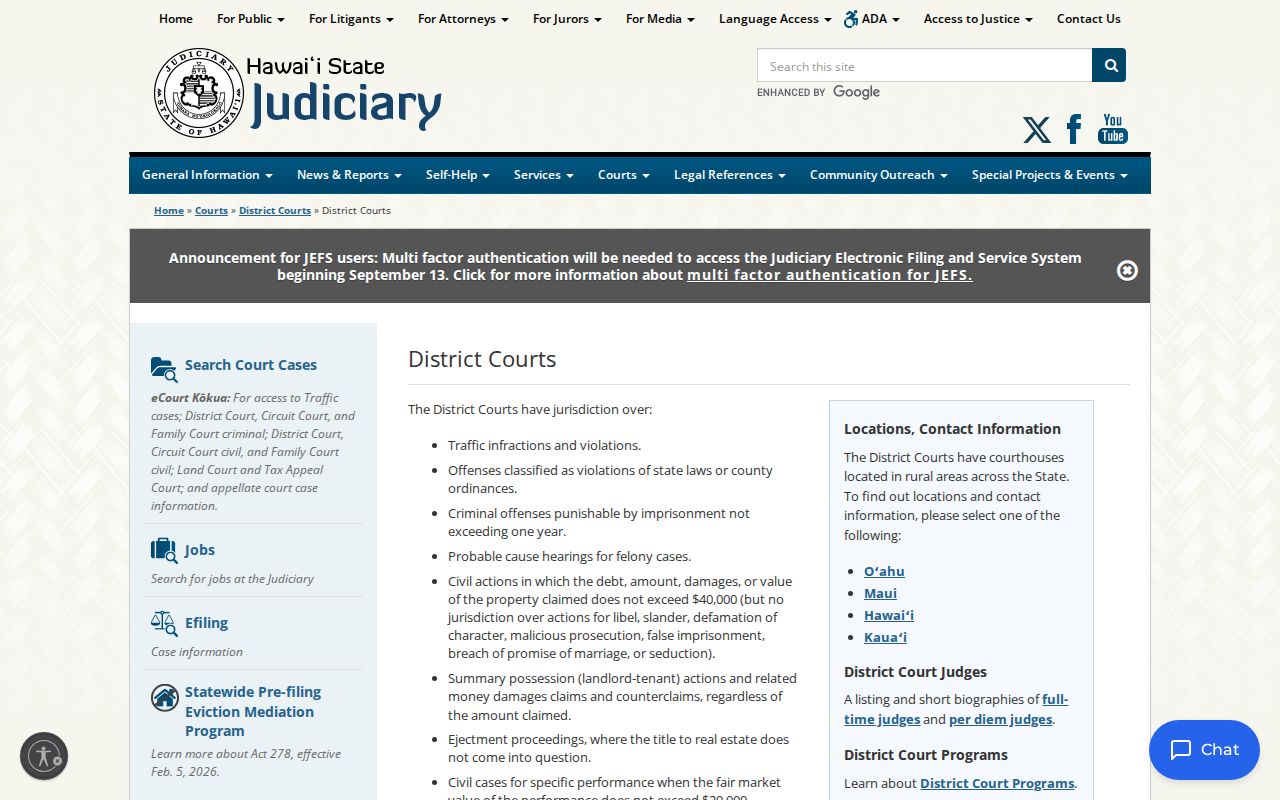
District dockets handle the island's traffic tickets, parking disputes, misdemeanors, small claims, and summary-possession cases. Where you live does not decide which courthouse your case lands in. The Family Court jurisdiction page closes out this comparison of court levels with the last image.
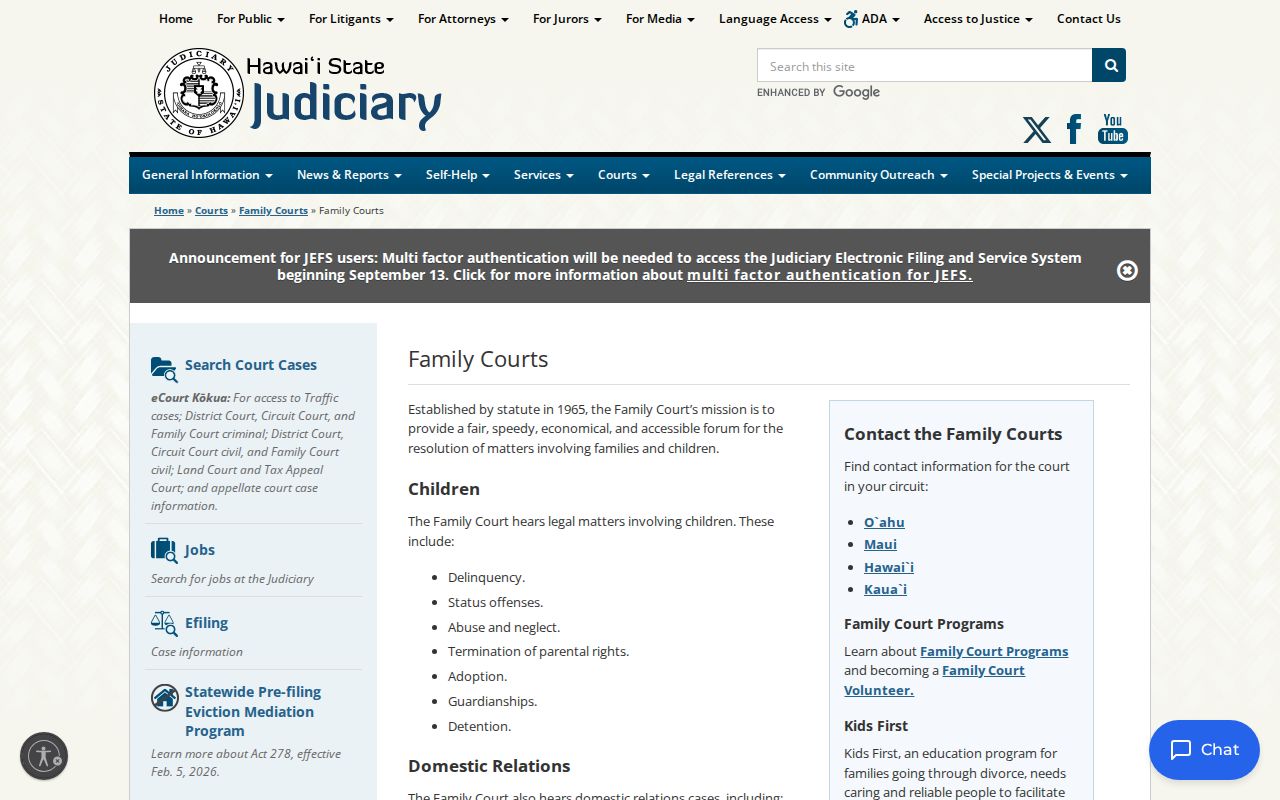
Family Court sits inside the Circuit Court structure. Even so, many juvenile and protected family matters stay confidential by law. When a Hawaii County docket search comes back empty for one of those cases, the legal boundary is usually the reason, not a search error on your end.
Finding Court Dates and Settings
Start with the case docket. Then scan its scheduled-hearings area. eCourt Kōkua offers an Upcoming Court Hearings feature that searches by exact Case ID or by court and location. For nonconfidential case types, it pulls a real-time two-week view. It lists date, time, court, courtroom, and presiding judge. It shows future hearings only. So treat it as a forward-looking tool rather than a historical calendar archive.
The courthouse posts a daily calendar too, and it works as a same-day physical fallback. Suppose a notice you saved conflicts with a newer docket entry. That usually signals a continuance, reset, or new order. A call to the clerk clears it up. Hilo Circuit Legal Documents is 808-961-7400; Kona is 808-322-8750. District matters go to Hilo at 808-961-7515. Kona is 808-322-8700 or 808-322-8703. South Kohala is 808-443-2030.
The full Hawaii County court calendar process also covers why an old setting lingers in history after a new date is entered. One caution worth repeating: a motion to continue is a request, not a ruling. Check for the later order or setting before assuming the motion was granted.
Hawaii County Dockets From CourtConnect to 2026
Hawaii County's online docket grew by fits and starts. eCourt Kōkua took over from CourtConnect in 2010. It added clearer screens for balances, warrants, stoppers, parking, party roles, and hearings. JIMS and JEFS then spread across more case types before scanned images arrived in waves. District civil came in October 2019. Circuit civil followed later that month. Land and Tax arrived in November 2019, and Family civil in April 2022.
A public search for future hearings went live in August 2023. In May 2026, eCourt Kōkua got refreshed layouts and tabs. The update improved navigation, readability, and accessibility. Core functions stayed intact. The current user manual supersedes the older screenshots of the interface. Third Circuit also kept electronic Document Drop-off. Most courthouses dropped that post-pandemic service.
Paper has not disappeared, though. Bound volumes and off-site files still hold older Hawaii County court docket records. When a PDF icon is missing, the path leads back to the kiosk, the counter, a phone call, or a written request.
Specialty programs add a local layer. They do not create a separate public treatment file. Third Circuit runs Hilo and Kona Adult Drug Courts plus Veterans Treatment Courts. The 2025 Judiciary report counted 128 participants served that year and 430 graduates overall. Those numbers measure programs, not county filing totals. Kona's Nā Hulu Wehi Women's Court pilot was authorized in 2025. Hearings and orders stay tied to the underlying case docket when they are not confidential. Treatment and protected health details remain restricted.
Public Access to Dockets
Access rests on the Hawaii Court Records Rules. Under HCRR Rule 10.1, court and ADLRO records are open during business hours. A statute, rule, or order can close them. Closed and archived records must be produced within a reasonable time. The exception is records destroyed, deleted, or transferred. Rule 10.2 allows electronic reports, images, files, links, and internet access, balanced against system integrity.
The Judiciary's official court-record access instructions lay out three channels. They are online search, courthouse access, and written requests. That official page shows the routes for any Hawaii County court docket.
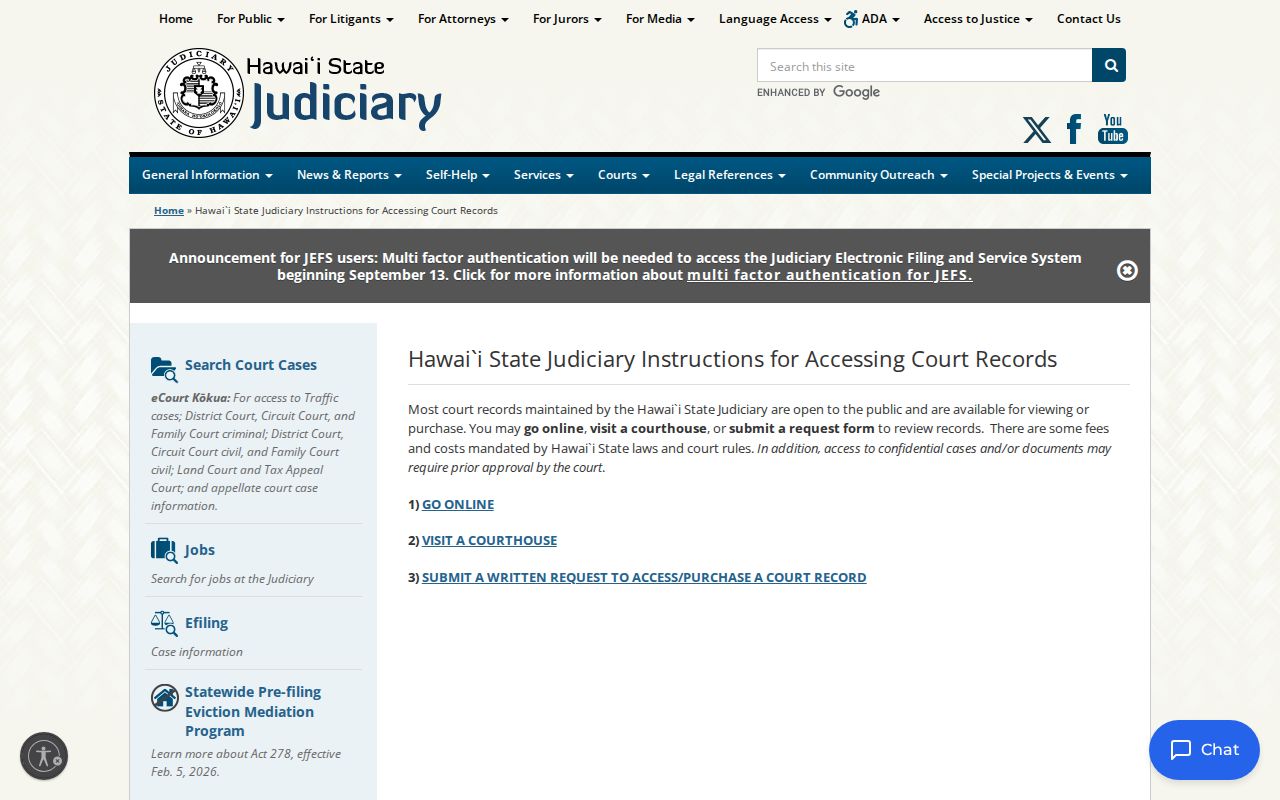
Each route has its own job. Remote search locates the case, a courthouse terminal may show more public images, and Form 3 requests inspection or copies. Hawaii's general agency-record law does not replace the Judiciary process for a case docket.
Key Hawaii rules:
HCRR Rules 10.1 and 10.2 cover ordinary and electronic access.
HCRR Rule 10.4 controls authorized classes for restricted records.
HCRR Rule 10.13 governs subscription, enhanced, and bulk access.
HRS section 607-5 supplies Circuit Court fee authority.
Hawaii County Court Docket Kiosks
The Judiciary's courthouse record-access page explains public-computer and in-person viewing. That official page covers the courthouse fallback for Hawaii County court docket material.
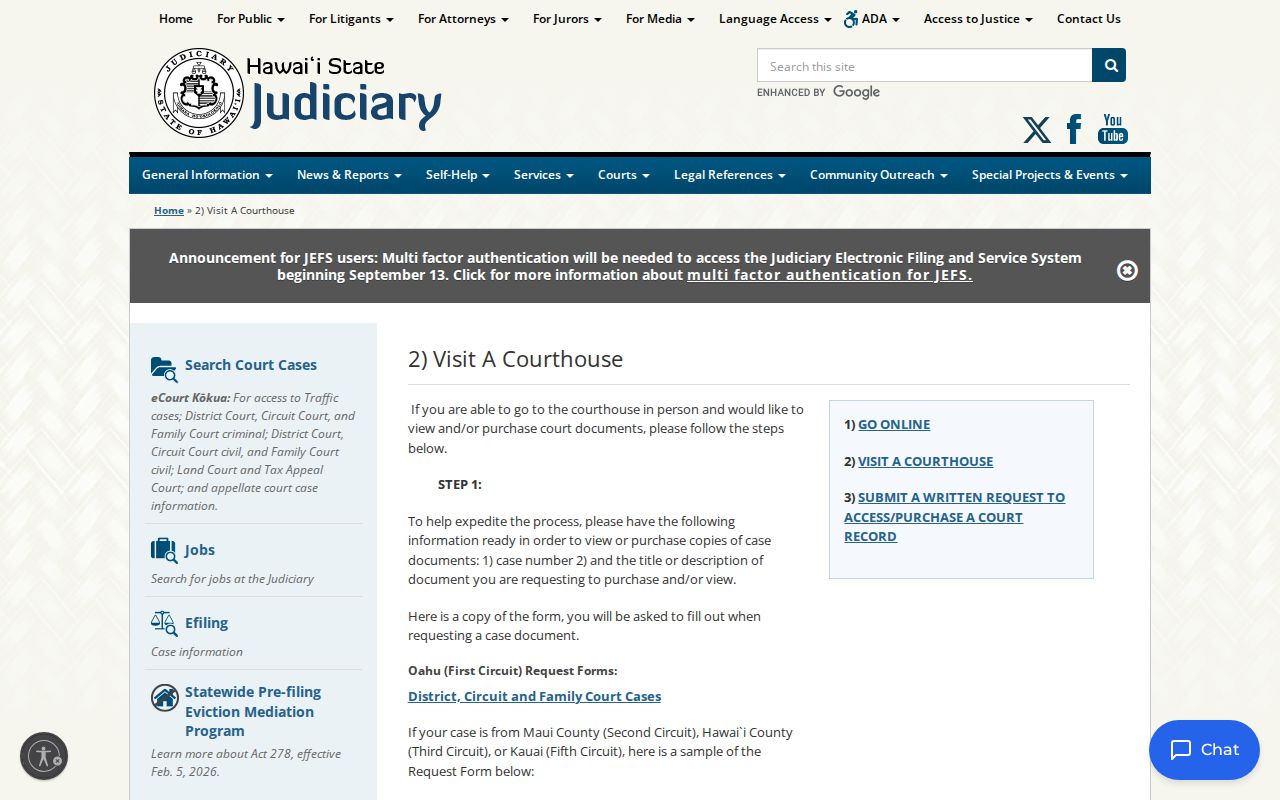
Public kiosks give free on-screen viewing of available documents. Printing and certification still cost money. At Hale Kaulike, computers sit near first-floor Legal Documents and in the second-floor Law Library. Keahuolū offers West Hawaii kiosk access. Call ahead for files older than five years, since they may be stored off site.
| Service | Published amount or condition |
|---|---|
| Kiosk viewing | No charge on screen |
| Hard copy, 1 to 30 pages | $3 flat |
| Hard copy over 30 pages | $3 plus $0.10 per extra page |
| Form 3 paper copy | $1 first page, then $0.50 each additional page |
| Certification under seal | $2 per document plus copying |
Two copy schedules exist, each tied to different rules and channels. Ask the clerk which one applies instead of merging them into a single price.
Hawaii County Confidential Docket Boundaries
Public access never means every case or field is searchable. Juvenile records, juvenile traffic records, confidential Family Court matters involving minors, sealed filings, protected identifiers, and anything restricted by court order sit outside ordinary remote access. Still, a sealed document can appear on a docket. The entry itself must reveal nothing protected.
That visible restricted entry works as a marker. It does not mean the record is lost. Nor can its content be pulled from a public terminal. Anyone outside an authorized class needs the required court order. Form 3 alone does not create access. A clerk cannot waive confidentiality.
No PDF icon: For an otherwise public record, try a courthouse kiosk or clerk request. For sealed or confidential content, the access rule still controls.
The Clerk and Docket Records
These records live with the Legal Documents Section of the Circuit Court of the Third Circuit, Hawaii State Judiciary. The Hawaii County Clerk does not keep them. District and Family clerks hold the case types assigned to their own courts. Staff take filings and maintain JIMS entries and images. They also provide inspection and certify copies. Phone staff can route a request. An exact Case ID and docket-entry details make it far more useful.
The official Third Circuit contact directory lists the courthouse offices behind that image.
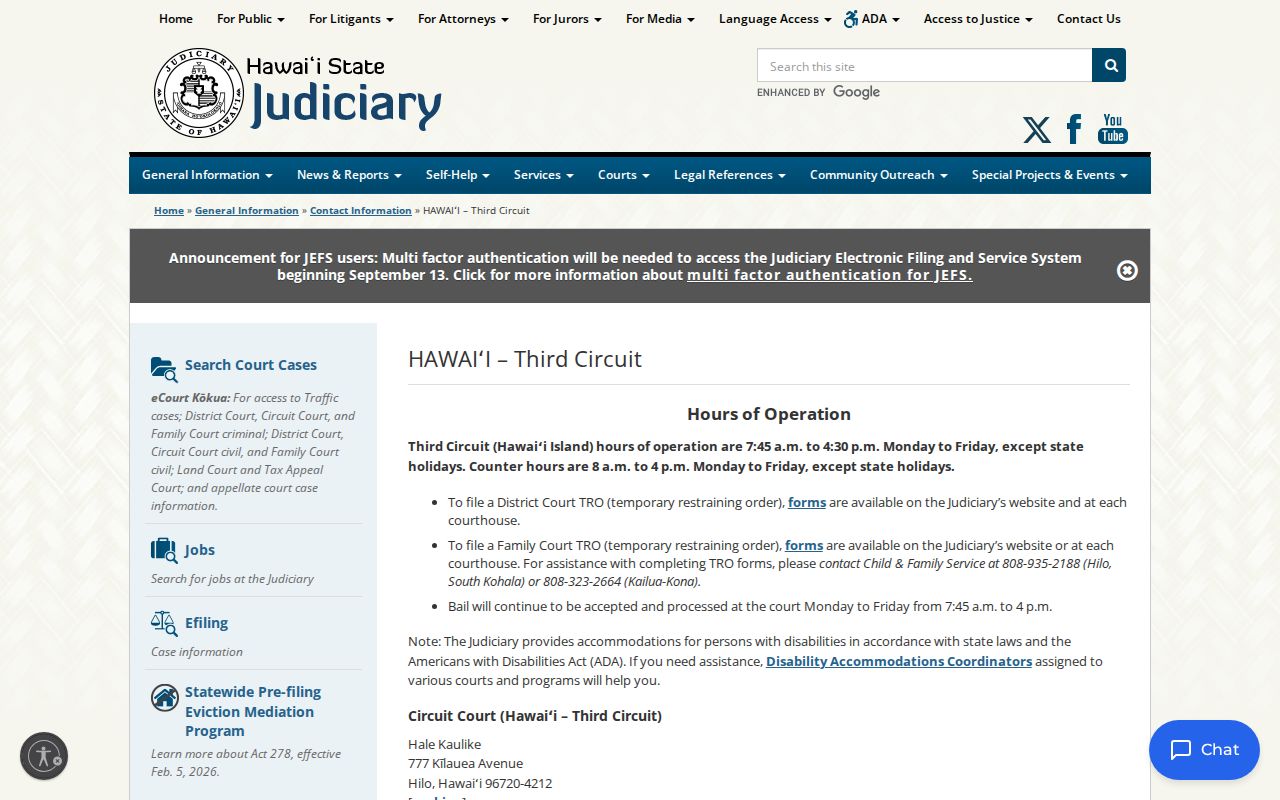
The directory splits out Legal Documents, District Court, Family Court, estate, court reporters, fiscal, law library, and probation functions. A filed order comes from Legal Documents. A transcript goes through court reporters.
Hale Kaulike Legal Documents
777 Kīlauea Avenue
Hilo, HI 96720-4212
808-961-7400
Keahuolū Legal Documents
74-5451 Kamakaʻeha Avenue
Kailua-Kona, HI 96740
808-322-8750
Hawaii County Court Docket Copy Routes
The Third Circuit court forms page backs the Hawaii County court docket image assigned here.
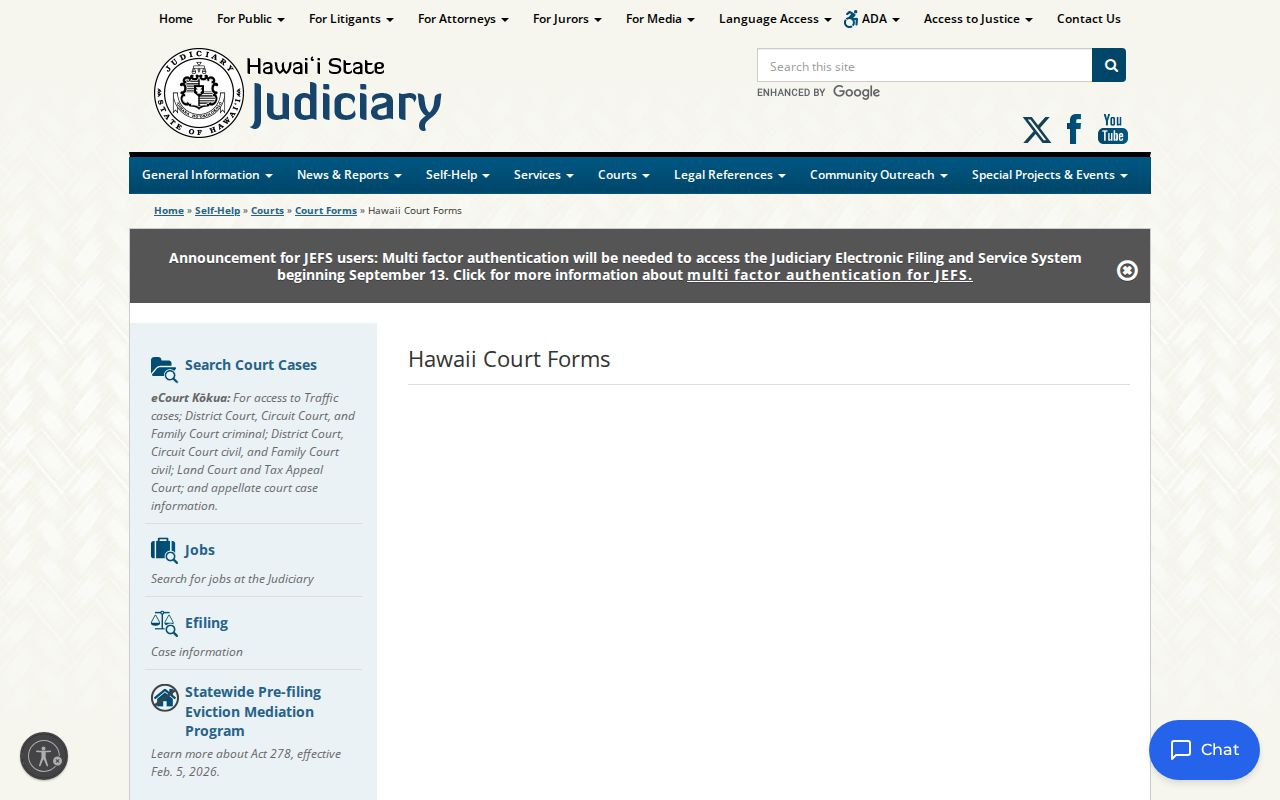
HCRR Form 3 covers inspection or a complete or partial copy. List circuit 3 and the court type. Add party names, the Case ID if known, and the precise documents wanted. Delivery can be pickup, mail, fax, or email where available. Ask for certification when you need an authenticated copy.
A party in an open case can register for JEFS. That beats buying public documents over and over. Transcripts follow the separate court-reporter route. Bulk data requests go to the Administrative Director under HCRR Rule 10.13, not the local counter.
Court Dockets by City in Hawaii County
Hawaii County has no incorporated cities. It has no municipal courts either. Five Census-designated communities appear here, ranked by 2020 population. Their pages point residents to state District, Circuit, and Family Court dockets. None has a city clerk, a city citation portal, or a municipal docket. Court assignment and the Case ID control. Residence alone does not decide.
Hilo Court Docket
44,186 residents in 2020. Hale Kaulike is the East Hawaii center for state court matters.
Kailua-Kona Court Docket
19,713 residents in 2020. Keahuolū is the West Hawaii state courthouse center.
Hawaiian Paradise Park Court Docket
14,957 residents in 2020. Remote search usually leads to East Hawaii court contacts.
Waimea Court Docket
9,904 residents in 2020. South Kohala District Court serves assigned District matters.
Hawaiian Ocean View Court Docket
4,864 residents in 2020. The statewide portal and pre-trip clerk calls are vital.
Those five links lead to community access pages for each city, not to city courts. Hawaii County has no municipal courts of its own. Every Hawaii County court docket runs through the state system instead. Cases start in state District Court. They move to state Circuit Court when the law calls for it. A case under appeal gets its own appellate docket before the Intermediate Court of Appeals or the Hawaii Supreme Court.
Map and Directions to the Hale Kaulike Courthouse
Third Circuit Circuit, District, and Family Court files for East Hawaiʻi are kept at Hale Kaulike, on Kīlauea Avenue in Hilo, the county seat. Public computers sit on the first floor near the Legal Documents counter, and the Law Library is on the second floor. West Hawaiʻi residents instead use the separate Keahuolū Courthouse in Kailua-Kona, since the island's two court centers are a substantial distance apart.
Hale Kaulike Courthouse
777 Kīlauea Avenue
Hilo, HI 96720-4212
808-961-7400
Monday through Friday, 7:45 a.m. to 4:30 p.m.
Keahuolū Courthouse
74-5451 Kamakaʻeha Avenue
Kailua-Kona, HI 96740
808-322-8750
Public record access 7:45 a.m. to 3:00 p.m., first come, first served.
Courthouse entry includes security screening, and a file more than five years old may be stored off-site, so calling Legal Documents before a long island crossing saves a trip. Parking maps are posted on the official Third Circuit contact page, and visitors needing accommodation should contact a Disability Accommodations Coordinator in advance.