
How to Search the Hilo Court Docket
For a public Hilo court docket, the official route is eCourt Kōkua. Enter a Case ID if you have one. Case numbers from the Third Circuit now begin with 3. Name searches ask for a first and last name. You can narrow the field with filing dates, case type, partial spelling, or phonetic spelling. Searching by company name or Party ID works too. Before trusting any event list, confirm the court, case type, filing date, caption, and party.
A missing PDF icon is not the end of the road. The Hilo courthouse has public kiosks. Clerk counters can handle requests, and staff can answer by phone. HCRR Form 3 covers inspection and copies. Reading the online docket costs nothing. But downloading an image or ordering a certified copy is a separate paid service.
- Search the exact Case ID or the party name in eCourt Kōkua.
- Confirm circuit 3 and the Hilo court shown in the header.
- Read dated events, documents, hearings, status, and disposition.
- Check Upcoming Court Hearings for the current future setting.
- Call or visit the correct Hilo clerk when an older public image is missing.
The portal keeps a published weekly schedule and opens later on Sunday. Results shift as clerks add events, so save the Case ID rather than a picture of the screen. Check the current docket again before any hearing. A name search may pull up several people. Sort them out with the Party ID, court, case type, filing date, and caption. A shared name alone proves nothing about who owns the case.
No Hilo Municipal Court Docket
Hilo is the county seat, but it is not an incorporated city. So there is no Hilo municipal court. There is no city judge, city citation portal, or municipal docket anywhere. Traffic, parking, misdemeanors, small claims, and summary possession cases all go to the District Court of the Third Circuit. Felonies run through Third Circuit operations at Hale Kaulike. So do major civil cases, probate, guardianship, and public Family Court matters.
This setup trips people up in one common way. The Hawaiʻi County Clerk runs elections and county legislation, not Hilo court records. A case that started in Hilo stays a Judiciary file no matter what. Where someone lives tells you little. Let the Case ID and court header decide which court holds the record.
The Hilo Municipal Court
There is no Hilo Municipal Court. That job belongs to the Hawaiʻi State Judiciary, and the courthouse is Hale Kaulike, 777 Kīlauea Avenue, Hilo, HI 96720-4212. Call Circuit Legal Documents at 808-961-7400. District Court is 808-961-7515, Family Court is 808-961-7500, or 808-961-7650 for estates and guardianships.
The office split matters more than it looks. Legal Documents keeps Circuit pleadings, orders, docket images, and certified copies. District and Family clerks each keep their own files. Transcripts come from neither, since Hilo court reporters at 808-961-7563 handle that separate channel. Check the official Third Circuit contact directory before visiting. Assignments and access rules can change.
Hilo Court Docket Kiosks
Hale Kaulike has public computers. Find them near the first-floor Legal Documents area and in the second-floor Law Library. They shine when a Hilo court docket entry is public, but the image cannot be bought from home. Viewing an electronic document at a terminal is free. Printing, mailing, and certification still cost money.
No kiosk can break a seal or bypass a confidentiality rule. Yet an eligible public image sometimes appears there when remote access fails. Bring the exact Case ID plus the docket-entry date or title. Staff can then find the right item fast. Files older than five years may sit off site. Call Legal Documents before you travel.
Hilo Court Dates and Settings
Check any Hilo setting two ways. Use the case docket and the live Upcoming Court Hearings tool. The hearing search takes a Case ID or a court and location. It returns the next two weeks of nonconfidential hearings. Same-day coverage falls back to the daily calendars posted at Hale Kaulike. Old notices linger in history after a reset. So trust the newest order and the newest hearing result.
| Date | The scheduled day in the current hearing result or controlling order. |
|---|---|
| Time | The listed start time, which should be confirmed after any change. |
| Courtroom | The Hale Kaulike room or Hilo court location assigned. |
| Judge | The presiding judge shown for the public hearing. |
| Setting type | Arraignment, motion hearing, status, pretrial, trial, sentence, or review. |
A motion to continue is just a request. It does not prove a Hilo court date moved. Look for the later order, or call the clerk. A saved calendar screen can go stale because JIMS updates in real time.
Hilo Court Self-Help Limits
The Hale Kaulike Self-Help Center explains forms and procedure. But it is not a Hilo docket counter. Walk-in help runs Tuesday from 11:15 a.m. to 12:45 p.m. Friday phone help uses 808-909-2845 in that same window, minus holidays. Staff will not pull files, certify copies, or hand out legal advice. The Judiciary's Hilo and Kona self-help schedule draws the same line.
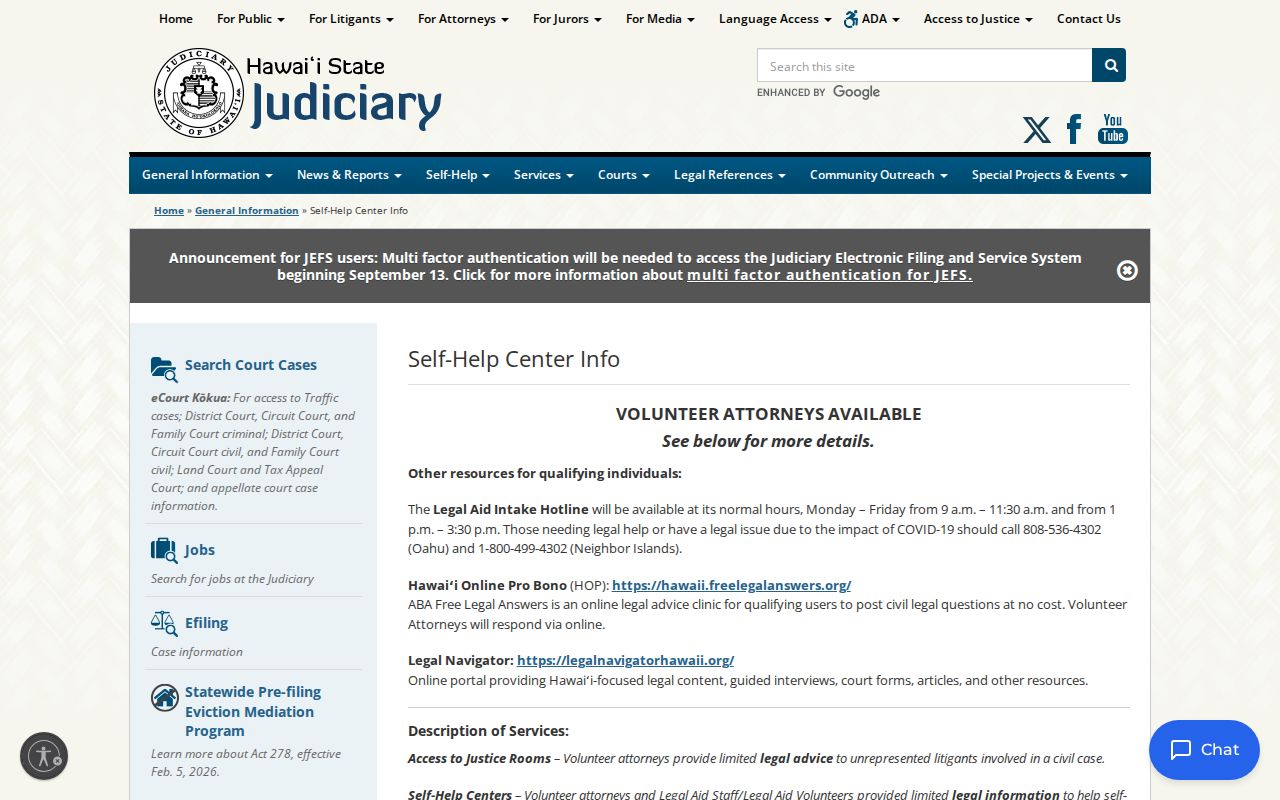
The official schedule makes the split plain. Form questions go to self-help, while record requests stay with the Hilo clerk.
Hilo Traffic Tickets
Traffic tickets written in Hilo are filed with the state District Court. It is not a city tribunal. The public case record lives in eCourt Kōkua. That is where a Hilo court docket entry for a citation will surface. It can take 13 days or more for a citation to show up, though. The paper citation and any later court instructions still control what you must do.
Payable traffic and parking infractions can be settled through eTraffic Hawaiʻi when eligible. That service handles payment only; it is not a full Hilo docket search. Contesting a citation, or any appearance-required matter, means following District Court instructions rather than the payment screen. If the record seems missing or unclear, call Hilo District Court at 808-961-7515. The countywide traffic court records guide explains the difference. It covers how the court case and the payment function differ.
Hilo Court Docket Language Access
Interpreters and language help come from the Judiciary, and any Hilo court user can ask. Make the request through the court's official process, ideally before the hearing date. The service changes nothing about what the public docket displays. It never opens sealed or confidential material. The official court language assistance service page lays out the statewide request route. It also covers what help covers.
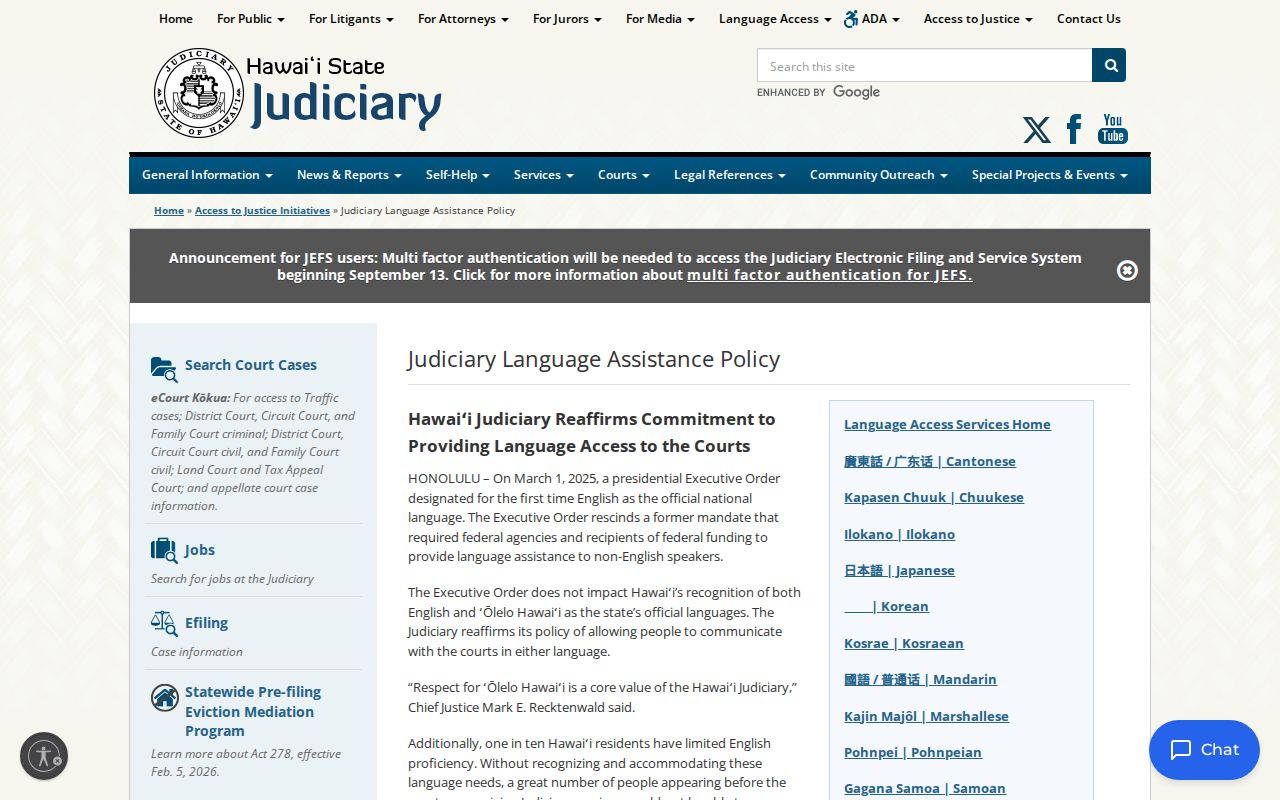
Hearing access in Hilo ties directly to the Judiciary service that helps people take part fully.
Where Hilo Cases End Up
Hilo District Court takes traffic, parking, most misdemeanors, violations, small claims, summary possession, and other matters. Those all sit inside District jurisdiction. A felony may open there through preliminary proceedings. It then continues under a new Circuit Court Case ID. Circuit Court holds felony trials and the major civil cases. An appeal gets its own Hawaiʻi Intermediate Court of Appeals docket. The Hawaiʻi Supreme Court sits above that for further review.
Docket flow: Hilo District Court → Circuit Court of the Third Circuit → Intermediate Court of Appeals.
This flow is not one docket page transferring between courts. Search the new Case ID named in the later filing instead. The county court docket overview sketches the wider hierarchy, and there is no separate city court layer to hunt for.
Hilo Specialty Court Dockets
Hilo Adult Drug Court and Veterans Treatment Court sit inside the Third Circuit. They form a specialty layer there. Big Island Drug Court marked twenty years in 2022. Veterans Treatment Court started on Hawaiʻi Island in 2014. Hearings and orders usually appear under the underlying criminal Case ID. Treatment enrollment does not open private assessments, health information, or therapy details to the public.
Read specialty events next to the main criminal docket. A review setting is not its own public treatment file. Hilo Drug Court Probation can be reached at 808-961-7566. Do not treat countywide treatment-court figures as Hilo-only caseload data.
A public Hilo entry may name a review date, probation action, order, or disposition. It says nothing about services delivered outside the courtroom. The latest entry still controls. If a specialty hearing moves, check the two-week hearing tool and the current order. Take questions about a filed public order to Legal Documents. Take program questions to the program office. That split keeps the case record from blurring into program administration.
Hilo Court Docket Record Copies
Three things must stay distinct. The docket is the event index. A filed image is the actual pleading or order. A certified copy is authenticated by the clerk. Write down the Case ID and entry date before contacting Hilo Legal Documents. If no PDF appears, view the public image at a kiosk or request the file. HCRR Form 3 supports inspection and complete or partial copies by pickup, mail, fax, or email where offered.
Costs shift by channel, so ask for an estimate. Certification under seal costs extra beyond copying. A party in an open case may already have JEFS access and need not buy the public document. Older and off-site records take reasonable retrieval time. Exhibits and transcripts can follow other custody rules.
A precise Hilo request names the parties, the Case ID, the Third Circuit court, and the docket date or title of each document. On Form 3, choose inspection, a complete copy, or a partial copy, then pick a delivery route offered. Legal Documents can say which fee schedule applies. The hard-copy schedule and the Form 3 paper-copy schedule differ, so never blend them into one claimed rate. Mailing cost may also apply. When certification is not needed, the free kiosk view still works.
Public Access to Hilo Court Records
The Hawaiʻi Court Records Rules govern access to Hilo case records. Rule 10.1 opens records during regular business hours unless a statute, rule, or order restricts them. Rule 10.2 permits electronic access that preserves system integrity. Rule 9 shields personal information. The county's ordinary public-record office is not the route for a Judiciary case file.
Access boundary: Juvenile matters, confidential Family Court cases, sealed filings, and protected personal data remain restricted. A public clerk cannot waive a court seal.
A Hilo court docket can list a sealed item without showing what is inside. The entry stays on the record. Its contents stay hidden. Someone outside the authorized class may have to ask a judge for an order, because Form 3 alone does not open that door. Public material is different. You can reach it through eCourt Kōkua, the Hale Kaulike kiosks, the right clerk by phone or at the counter, or a written request that names the case and the document you want.
Closed and archived public records must be produced within a reasonable time, unless they were destroyed, deleted, or transferred under lawful rules. Reasonable is not the same as instant. Off-site storage, staff workloads, and the size of a request can all slow things down. So do not read a docket line for a restricted filing as proof that a record is gone. The line can confirm an event happened while withholding the protected text. Ask the clerk about access status instead of guessing from a missing image.